Crossing Lines: How American Patients Are Sourcing Ivermectin Abroad and What Regulators Want You to Know
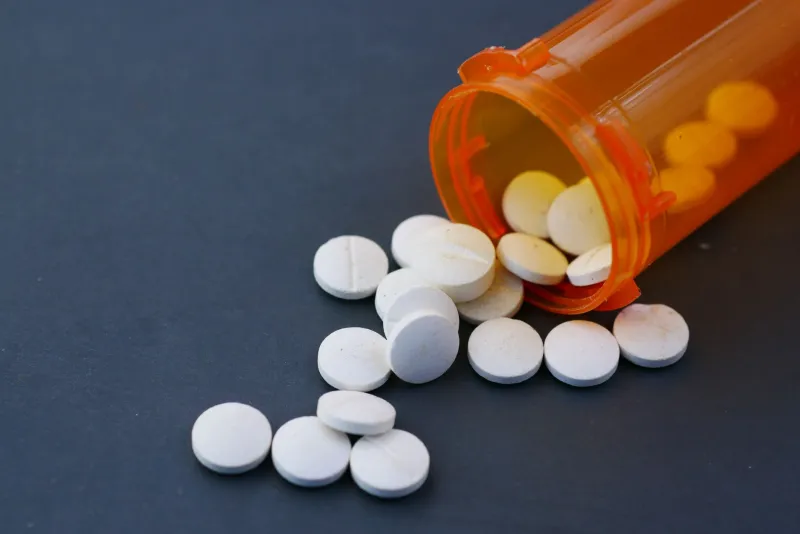
For a medication that remains fully legal and FDA-approved within the United States, ivermectin has generated a remarkable subculture of cross-border procurement. Patients who have been turned away by domestic pharmacists, denied coverage by insurers, or simply frustrated by the bureaucratic friction of obtaining a valid prescription have increasingly looked southward — and northward — for alternatives. The result is a loosely organized but surprisingly widespread practice that spans Mexican border towns, Canadian online pharmacies, and international mail-order operations operating from jurisdictions with minimal regulatory oversight.
Understanding why Americans pursue these channels, and what genuine risks accompany that pursuit, requires a candid look at both the domestic system's limitations and the very real dangers that unregulated foreign sources introduce.
Why the Southern Border Has Become a Pharmacy Destination
Mexico's pharmaceutical retail environment differs substantially from that of the United States. Many medications that require a prescription stateside — including ivermectin formulated for human use — are available over the counter at Mexican farmacias, particularly in border cities such as Tijuana, Nogales, Ciudad Juárez, and Nuevo Laredo. For Americans living in border states like California, Arizona, New Mexico, and Texas, a short drive has historically represented a practical workaround to domestic prescription requirements.
The appeal is straightforward: no physician visit, no insurance negotiation, no pharmacist refusal. Brand-name formulations such as Stromectol, along with generic equivalents manufactured by Mexican pharmaceutical companies, are often available at prices significantly lower than their American counterparts. Patients report purchasing blister packs of human-grade ivermectin tablets with relative ease.
However, the simplicity of the transaction masks several layers of legal and medical complexity that deserve careful consideration.
The Legal Reality at the Border
U.S. Customs and Border Protection (CBP) enforces strict rules regarding the personal importation of prescription medications. Under FDA policy, bringing foreign-purchased drugs into the United States is technically prohibited unless the medication is for personal use, poses no unreasonable risk, and is not available domestically in comparable form. Ivermectin fails that last criterion — it is commercially available in the U.S. — which means CBP officers have clear grounds to confiscate it at ports of entry.
In practice, enforcement is inconsistent. Small quantities of medications carried by individual travelers are frequently waved through without scrutiny, particularly at busy land border crossings where CBP resources are stretched thin. But inconsistent enforcement does not equal legal permission. Travelers whose supplies are seized have no legal recourse, and repeat offenders can face escalating consequences.
The FDA has repeatedly clarified that its enforcement discretion on personal importation does not extend to medications that are already FDA-approved and domestically available. Ivermectin's approved status in the U.S. places it squarely in the category of medications that the agency does not accommodate under its personal importation policy.
Canadian Online Pharmacies: A Different Kind of Risk
Canada's online pharmacy sector occupies a peculiar position in the American medication landscape. Hundreds of websites present themselves as Canadian dispensaries, and some are exactly what they claim to be — licensed Canadian pharmacies operating under Health Canada oversight. Many others, however, use Canadian branding while actually sourcing medications from India, Vanuatu, or other jurisdictions with minimal regulatory infrastructure.
For Americans seeking ivermectin through these channels, the verification problem is acute. The Canadian International Pharmacy Association (CIPA) maintains a list of verified member pharmacies, and patients who use CIPA-verified sources at least have some assurance of regulatory oversight. But a significant portion of websites marketing themselves as Canadian pharmacies are not CIPA members and are not subject to Canadian pharmaceutical standards.
The practical consequence is that a patient ordering what they believe to be Canadian-manufactured ivermectin may receive a product manufactured under entirely different — and potentially far less rigorous — quality control standards. Tablet potency, filler composition, and sterility protocols vary enormously across international manufacturers, and there is no reliable way for a layperson to assess product quality from a blister pack.
Quality Control: The Variable That Matters Most
Domestic FDA-approved ivermectin — whether brand-name Stromectol or a domestic generic — must meet specific standards for active ingredient concentration, bioavailability, manufacturing facility cleanliness, and labeling accuracy. These requirements exist because even small deviations in pharmaceutical manufacturing can produce medications that are either ineffective or dangerous.
International products, even those manufactured in countries with nominally robust regulatory systems, do not necessarily meet FDA equivalency standards. Studies examining international generic medications across various drug classes have identified concerning rates of subpotent and superpotent formulations — products that deliver either too little or too much active ingredient relative to their labeled dose.
For ivermectin specifically, dosing precision is not trivial. The therapeutic window — the range between an effective dose and a potentially harmful one — is meaningful, particularly in patients with certain neurological conditions, compromised blood-brain barrier integrity, or concurrent use of medications that affect ivermectin metabolism. An unlabeled or inaccurately labeled product from an unverified international source introduces dosing uncertainty that a patient cannot reasonably manage.
What Health Authorities Are Saying
The FDA has maintained a consistent public position: ivermectin for human use should be obtained through a licensed U.S. healthcare provider with a valid prescription, dispensed by a licensed U.S. pharmacy. The agency's concern about foreign-sourced medications is not unique to ivermectin — it reflects broader pharmaceutical safety principles — but the specific context of ivermectin has prompted unusually direct public communications.
The agency has warned consumers that products purchased outside the regulated U.S. supply chain may be counterfeit, contaminated, or incorrectly dosed. These warnings extend to international online pharmacies, regardless of the country of origin they claim.
State health departments have echoed these concerns, with several issuing specific advisories cautioning residents against cross-border medication acquisition. The Centers for Disease Control and Prevention (CDC) has similarly emphasized that medications obtained outside the U.S. prescription system lack the quality assurances that domestic regulatory oversight provides.
The Underlying Demand Problem
It would be intellectually incomplete to examine cross-border ivermectin procurement without acknowledging the domestic access frustrations that drive it. Americans pursuing foreign sources are not, by and large, acting recklessly. Many are patients who have been unable to obtain a prescription through conventional channels, encountered pharmacist refusals despite holding valid prescriptions, or found domestic pricing prohibitive without insurance coverage.
The cross-border market for ivermectin is, in significant part, a symptom of a domestic access system that has produced genuine friction for patients with legitimate medical interests in the drug. That friction does not justify the legal and medical risks of unregulated foreign procurement, but it does explain why those risks are being accepted by a meaningful number of Americans.
Addressing the underlying access problem — through clearer prescribing guidance, improved pharmacist-prescriber communication, and more consistent insurance coverage determinations — would likely do more to reduce cross-border procurement than enforcement action alone.
A Measured Assessment
For Americans currently considering or actively using cross-border sources for ivermectin, the core message from health authorities is unambiguous: the risks are real, the legal protections are absent, and the quality assurances that domestic regulation provides cannot be replicated through foreign procurement, regardless of how reputable a foreign source may appear.
Patients who believe ivermectin is medically appropriate for their circumstances are best served by working within the domestic system — seeking out prescribers willing to engage with the relevant clinical literature, exploring telehealth options where in-person care is unavailable, and consulting with compounding pharmacies for formulations not commercially available. These pathways are more complicated than a border crossing, but they offer something foreign pharmacies cannot: accountability.