Ivermectin Dosing Demystified: What the Numbers Actually Mean and Why Getting Them Wrong Is Dangerous
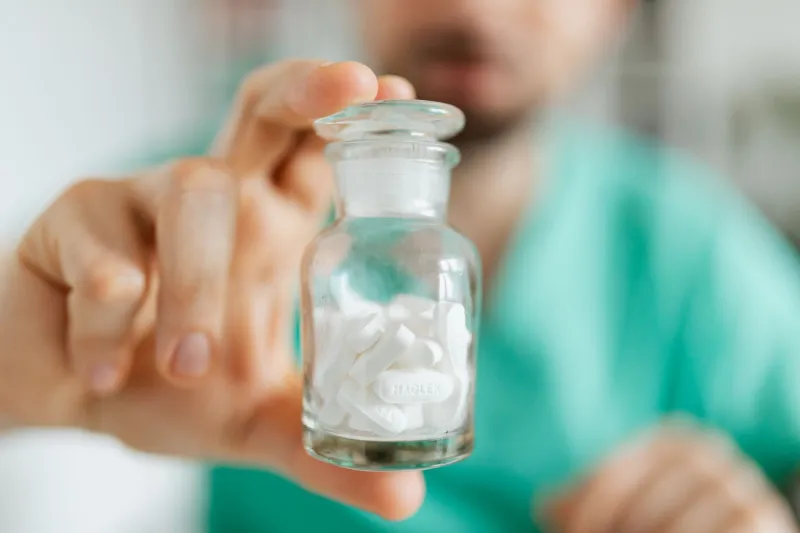
Few aspects of the ivermectin conversation have generated as much confusion—and as much potential for harm—as the question of dosing. Across internet forums, social media groups, and self-described health advocacy websites, dosing recommendations for ivermectin circulate freely, often stripped of the clinical context that makes them meaningful. For patients seeking to understand this medication, the proliferation of unvetted dosing information represents one of the most significant hazards in the current information environment.
This article takes a rigorous look at how ivermectin dosing actually works from a pharmacological standpoint, what variables influence appropriate dosing, and why the concept of a universal dose is not merely oversimplified—it is pharmacologically incoherent.
The Foundation: Weight-Based Dosing Principles
Ivermectin is classified as a weight-based medication, meaning that appropriate dosage is calculated in relation to a patient's body weight rather than administered as a flat quantity. For its FDA-approved indications, the standard dosing framework is expressed in micrograms per kilogram of body weight (mcg/kg).
For intestinal strongyloidiasis, the approved adult dose is 200 mcg/kg, administered as a single oral dose. For onchocerciasis, the same 200 mcg/kg dose applies, though treatment intervals differ based on disease burden and patient response. These figures are not arbitrary—they emerge from pharmacokinetic and pharmacodynamic studies conducted during the drug's development and subsequent clinical evaluation.
What this means in practical terms is that a 130-pound individual and a 220-pound individual require meaningfully different doses to achieve equivalent therapeutic plasma concentrations. A flat-dose recommendation—say, "take X milligrams"—that happens to be appropriate for one body weight may be inadequate for another or potentially excessive for a third. The math is straightforward, but its implications are serious.
Bioavailability: Why the Same Dose Can Produce Different Results
Beyond weight-based calculations, a second pharmacological variable substantially affects ivermectin's behavior in the human body: bioavailability. Bioavailability refers to the proportion of an administered dose that reaches systemic circulation in an active form. For oral ivermectin, this figure is significantly influenced by whether the drug is taken with food.
Studies have demonstrated that consuming ivermectin with a high-fat meal can increase the drug's bioavailability by approximately 2.5-fold compared to fasting administration. This is not a minor variation. A dose taken on an empty stomach and the same dose taken after a meal can produce dramatically different peak plasma concentrations—a factor that has meaningful implications for both therapeutic efficacy and adverse event risk.
This bioavailability interaction is one reason that standardized clinical dosing protocols specify not just the quantity of medication but the conditions under which it should be taken. Reproducing a dose recommendation without reproducing the administration conditions can yield entirely different pharmacological outcomes.
Indication Matters: The Same Drug, Different Protocols
A third dimension of dosing complexity involves the specific medical condition being treated. Ivermectin's approved indications in the United States each carry distinct dosing protocols, treatment durations, and follow-up requirements. These differences are not cosmetic—they reflect the distinct biology of different parasitic infections and the varying degrees of penetration required to achieve therapeutic effect.
For example, the single-dose protocol appropriate for onchocerciasis would be entirely inadequate for certain other parasitic conditions that require multi-day treatment regimens. Conversely, applying a more aggressive multi-dose protocol to a condition responsive to a single dose introduces unnecessary drug exposure without corresponding therapeutic benefit.
When dosing information is shared outside of clinical context—as it routinely is on social media—the critical link between indication and protocol is severed. A patient who reads that "200 mcg/kg is the standard ivermectin dose" has received a fragment of accurate information embedded in a framework that makes it potentially misleading.
The Danger of Off-Label Dosing Recommendations
Much of the dosing information circulating online pertains to off-label uses of ivermectin—applications for which the drug has not received FDA approval and for which the evidence base is, at best, contested. The dosing figures associated with these off-label applications are not derived from the same rigorous pharmacokinetic studies that undergird approved indications. They emerge from a heterogeneous mix of small-scale studies, preprint papers, anecdotal reports, and extrapolation from animal models.
The consequences of acting on such information can be severe. Ivermectin toxicity—while relatively rare at approved doses for approved indications in otherwise healthy adults—becomes meaningfully more probable as doses increase. Adverse effects associated with excessive ivermectin exposure include neurological symptoms such as tremor, ataxia, and confusion; cardiovascular effects including hypotension; and gastrointestinal disturbances. In severe cases, particularly in individuals with compromised blood-brain barrier function, central nervous system toxicity can be life-threatening.
Certain patient populations face heightened risk. Individuals with a history of Loa loa infection may experience serious, potentially fatal neurological reactions to ivermectin even at standard doses. Patients taking medications that inhibit the CYP3A4 enzyme pathway may experience elevated ivermectin plasma levels due to reduced metabolic clearance. The presence of P-glycoprotein inhibitors in a patient's medication regimen can similarly affect ivermectin distribution. None of these interactions can be identified or managed without a thorough clinical evaluation.
The Role of the Prescribing Physician
The complexity outlined above is not presented to discourage patients from seeking information about ivermectin. Quite the contrary—an informed patient is better positioned to have a productive conversation with their healthcare provider. But that conversation is irreplaceable.
A licensed physician evaluating a patient for ivermectin therapy will consider body weight, concurrent medications, hepatic function, the specific indication under consideration, and the patient's complete medical history. They will select a formulation appropriate for human use, calculate a dose tailored to the individual, and establish appropriate monitoring and follow-up. This is not bureaucratic excess—it is the application of pharmacological science to individual human biology.
At StromectolInfo, we recognize that navigating the healthcare system presents real challenges for many Americans, whether due to cost, geographic access, or the reluctance of some providers to engage with certain treatment questions. These are legitimate concerns that deserve systemic solutions. However, the answer to an imperfect healthcare system is not to substitute internet-sourced dosing charts for clinical evaluation.
Practical Guidance for Patients
For patients who believe ivermectin may be appropriate for their condition, the most effective course of action is to approach their primary care provider or a relevant specialist with specific questions. Bringing documentation of symptoms, prior diagnoses, and any relevant clinical literature to that conversation can facilitate a more substantive discussion.
If a provider is unwilling to engage, seeking a second opinion from another qualified clinician is a reasonable and appropriate step. Telehealth platforms have expanded access to physician consultation significantly, and some providers are willing to evaluate ivermectin prescribing requests through those channels for appropriate indications.
What is not appropriate—and what carries genuine risk of serious harm—is self-prescribing based on dosing information obtained from non-clinical sources, particularly when that information pertains to off-label applications or involves veterinary-grade products. The pharmacological complexity described in this article is not hypothetical. It is the reason that dosing decisions for prescription medications exist within a clinical framework rather than a consumer one.