From Feed Stores to Medicine Cabinets: How Veterinary Ivermectin Entered the Human Health Debate
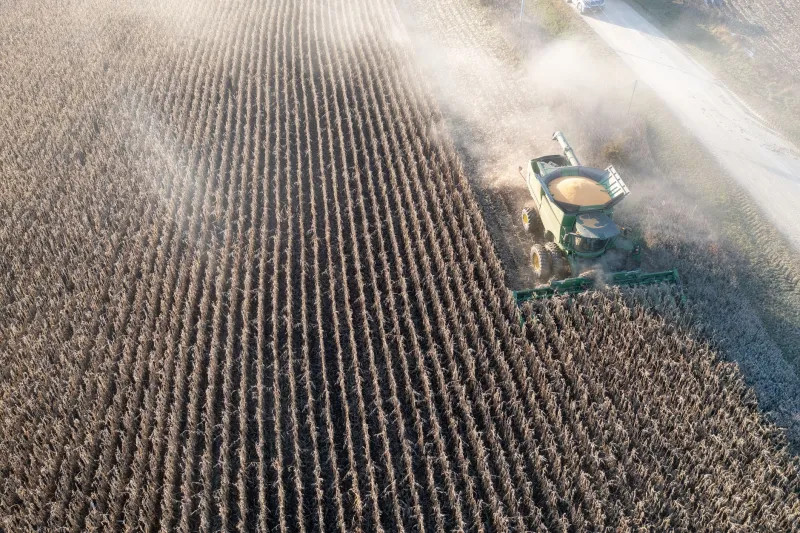
In a development that surprised many public health officials, farm supply retailers across the United States found themselves at the center of a medical controversy. Tractor Supply Company, Rural King, and countless independent feed stores reported unusual spikes in the purchase of ivermectin-based veterinary products—not by ranchers or livestock owners, but by individuals seeking treatment alternatives for human conditions. This phenomenon exposed a series of vulnerabilities within both the pharmaceutical supply chain and the broader regulatory framework governing drug access in America.
The Anatomy of a Supply Chain Disruption
To understand how veterinary ivermectin became a sought-after commodity among human consumers, one must first appreciate the conditions that created the demand. During periods when FDA-approved human formulations of Stromectol (ivermectin) were difficult to obtain through conventional channels—whether due to manufacturing constraints, distribution bottlenecks, or prescribing hesitancy—some individuals sought alternatives wherever they could find them.
Veterinary ivermectin products, widely available without a prescription at agricultural supply outlets, filled what many perceived to be a gap. These formulations—sold under brand names such as Ivomec and marketed for use in horses, cattle, and swine—contain the same active antiparasitic compound found in pharmaceutical-grade Stromectol. This chemical similarity led many consumers to conclude that the products were interchangeable. That conclusion, however, is deeply flawed and carries significant health risks.
What Separates Pharmaceutical Grade from Veterinary Grade
The distinction between FDA-approved human medications and veterinary preparations is not merely administrative. It is substantive, consequential, and rooted in decades of pharmaceutical science.
Pharmaceutical-grade ivermectin, as found in approved human formulations, undergoes rigorous manufacturing standards governed by Current Good Manufacturing Practice (cGMP) regulations. Every batch is tested for potency, purity, and consistency. Inactive ingredients—known as excipients—are carefully selected for human tolerability, and dosage concentrations are calibrated specifically for human physiology.
Veterinary formulations, by contrast, are designed and tested exclusively for animal use. The concentration of active ingredient in a large-animal paste or injectable solution may be dramatically higher than what is appropriate for human consumption. A standard equine ivermectin paste, for instance, is formulated for animals weighing up to 1,250 pounds. Attempting to extract an appropriate human dose from such a product introduces enormous margin-of-error risks.
Furthermore, excipients used in veterinary products—propylene glycol, mineral oil, and various stabilizers—may not be safe for human ingestion in the quantities present. These compounds are not evaluated for human oral safety in the context of veterinary applications.
The FDA's Position and Its Public Health Implications
The U.S. Food and Drug Administration has issued multiple public warnings explicitly advising against the human consumption of ivermectin products intended for animals. The agency's guidance is unambiguous: veterinary formulations are not approved, tested, or intended for human use, and their consumption can result in serious adverse events.
Reported consequences of consuming veterinary ivermectin have included nausea, vomiting, diarrhea, hypotension, allergic reactions, seizures, and in severe cases, neurological complications. Poison control centers across the country recorded a measurable uptick in ivermectin-related calls during periods of heightened consumer interest in the drug, with a notable proportion of those calls involving veterinary products.
The FDA's enforcement capacity in this area, however, is limited. Veterinary products sold through agricultural channels are regulated by different frameworks than human medications, and the act of purchasing a horse paste at a feed store is not, in itself, illegal. The regulatory gap lies in the fact that no mechanism effectively prevents a consumer from purchasing a veterinary product and self-administering it.
Regulatory Gaps and the Challenge of Enforcement
This situation illustrates a broader structural challenge within American drug regulation. The Controlled Substances Act and the Federal Food, Drug, and Cosmetic Act govern human pharmaceuticals with considerable rigor. Veterinary products, while regulated by the FDA's Center for Veterinary Medicine, operate under a separate—and in some respects, more permissive—framework.
The result is a regulatory seam that determined consumers can exploit. Unlike Schedule IV or Schedule V controlled substances, veterinary ivermectin carries no legal barrier to purchase. Agricultural retailers are not pharmacies; their staff are not pharmacists; and their point-of-sale systems are not connected to prescription drug monitoring programs.
Public health advocates have called for greater coordination between the FDA's human and veterinary divisions, as well as clearer labeling requirements and, in some cases, point-of-sale restrictions on high-concentration veterinary antiparasitic products. Progress on these fronts has been incremental at best.
What Informed Consumers Should Understand
For Americans who have a legitimate medical interest in ivermectin—whether for approved indications such as onchocerciasis, strongyloidiasis, or other parasitic infections—the appropriate path remains consultation with a licensed healthcare provider who can evaluate individual health circumstances and, where appropriate, prescribe pharmaceutical-grade Stromectol.
The appeal of veterinary alternatives is understandable in the context of cost and accessibility. FDA-approved ivermectin can be expensive without insurance coverage, and not all physicians are willing to prescribe it for certain conditions. These are real barriers, and they deserve serious policy attention. However, they do not change the fundamental calculus of risk associated with consuming products that were never evaluated for human safety.
At StromectolInfo, our commitment is to providing accurate, evidence-based information so that individuals can make genuinely informed decisions—and so that those decisions are guided by science rather than desperation or misinformation. The farm supply chain was never designed to serve as a pharmaceutical distribution network, and treating it as one carries consequences that extend well beyond any individual consumer.
Looking Forward: Lessons from a Supply Chain Vulnerability
The episode of widespread veterinary ivermectin use among human consumers should prompt a serious national conversation about pharmaceutical access, drug pricing, and the conditions under which people feel compelled to seek medical treatments outside conventional healthcare channels.
When approved medications are inaccessible—whether due to cost, supply constraints, or prescribing reluctance—the resulting vacuum will inevitably be filled by something. Ensuring that the something filling that vacuum is safe, effective, and properly dosed requires a healthcare system that addresses root causes rather than simply warning consumers away from dangerous alternatives.
Until those systemic issues are addressed, the most protective course of action for any individual remains engagement with the formal healthcare system, consultation with qualified medical professionals, and strict avoidance of pharmaceutical self-treatment using products designed for livestock.